White Shaker Cabinets in Suwanee, GA: A Buyer's Guide
White shaker has been the most-requested door in America for a decade. The gap between a good one and a cheap one comes down to four specifications most quotes never mention.
Most of the kitchens we build come from two Gwinnett County towns: Suwanee and Lawrenceville. White shaker is far and away the most requested door in both, and it shows up in almost every kitchen remodel we quote. Here is how to specify it so it looks custom instead of builder-grade.
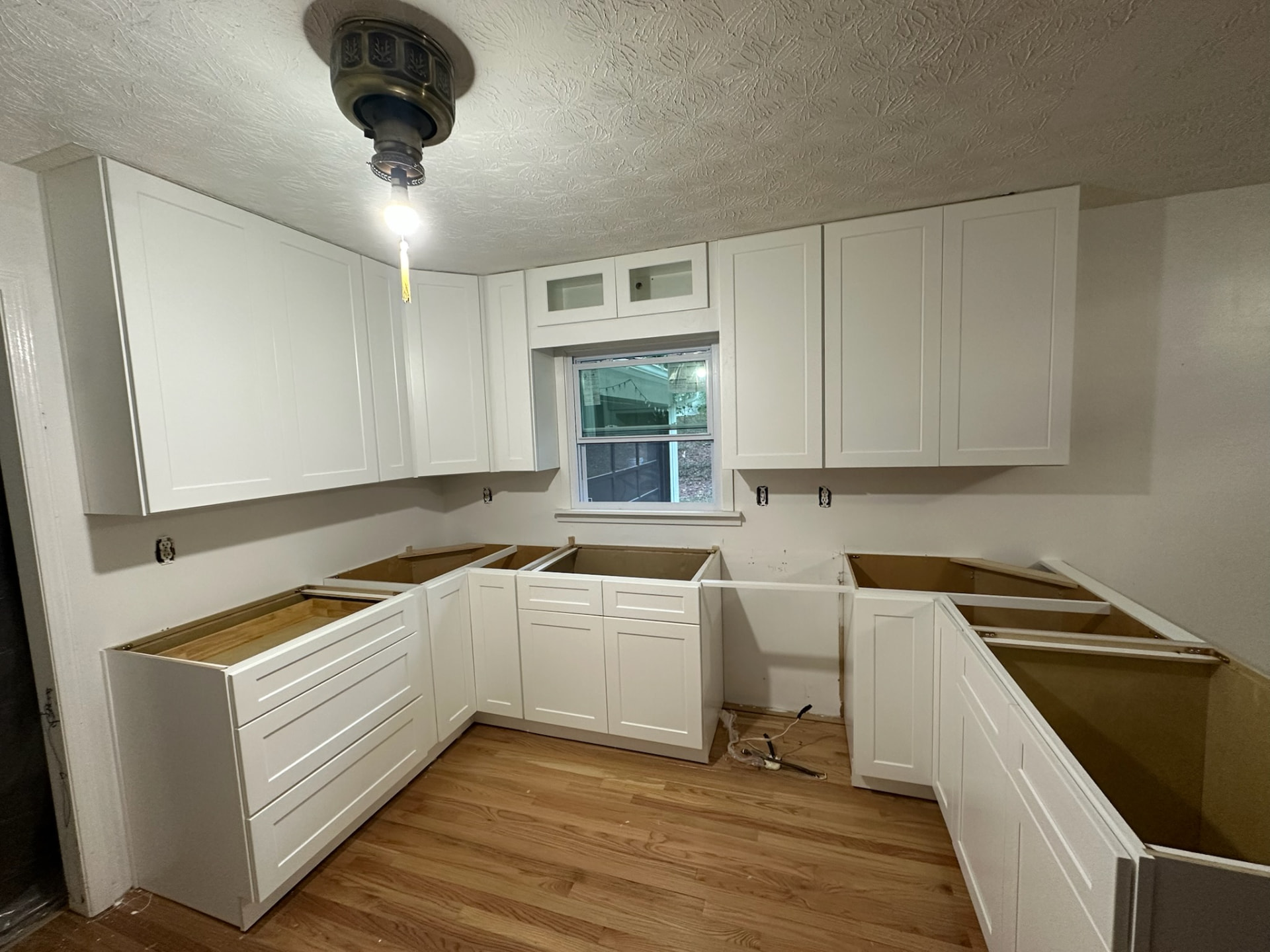
White shaker has topped every cabinet request list in the country since roughly 2014, and the usual criticism — that it is boring — misses why it persists. The shaker door is a five-piece frame-and-panel with no ornament, which means it sits comfortably in a 1920s bungalow in Grant Park and a 2024 new build in Suwanee alike. It is not a trend, it is a default.
What varies enormously is quality. Two kitchens can both be "white shaker" and be separated by a factor of three in price and a factor of ten in how long they look good. Here is what actually drives that.
1. Stile and rail width
The stile is the vertical frame member on a door; the rail is the horizontal one. Standard shaker is 2.25 inches. Narrow shaker runs 1.75 to 2 inches and reads more modern; wide shaker at 3 inches reads more traditional and farmhouse.
This is the single biggest style lever on a shaker door, and most stock lines do not let you choose. Because we build in our shop in Lawrenceville, we do. If your kitchen has a lot of narrow doors — a run of 12-inch pull-outs, say — a 3-inch stile leaves almost no panel visible and the door looks stubby. Narrow stiles fix it.
2. What the door is made of
There are three common constructions sold as white shaker:
- Solid maple frame with an MDF center panel. This is the best choice for painted cabinetry and it is what we build by default. Maple takes paint beautifully because the grain is tight; the MDF panel will never shrink, so you never get a hairline paint crack at the panel edge in January.
- All solid wood, including the panel. Sounds premium, and for stained cabinetry it is. For painted, a solid panel expands and contracts seasonally and eventually shows a thin unpainted line where it shrinks out of the frame groove.
- All MDF, one-piece routed. Stable and inexpensive, but the "frame" is a machined groove, not real joinery. Edges chip and cannot be repaired invisibly.
If a quote does not say what the door frame and panel are made of, ask. It is the difference between a cabinet that looks new in fifteen years and one that does not.
3. Finish: sheen and process
Sheen matters more than the white itself. Our default for painted cabinetry is a factory-applied catalyzed conversion varnish in a satin sheen, sprayed in a controlled booth and cured before the doors ever leave the shop.
- Matte hides surface imperfection and fingerprints but is harder to wipe clean.
- Satin is the sweet spot: cleanable, low glare, forgiving.
- Semi-gloss is the most durable and the least flattering, because it advertises every wave in the panel and every dent from a cabinet door hitting a stool.
A jobsite brush-and-roll paint job on cabinet doors, however carefully done, cannot match a catalyzed spray finish for hardness. If someone offers to paint your doors in your driveway, that is a legitimate budget option, but understand it will not wear the same.
4. Which white
"White" is not a color, it is a category with a temperature. Under Georgia daylight coming through south-facing windows, a cool blue-white can look grey and clinical by mid-afternoon. Under warm LED at night, the same white can look almost lavender.
Practical process: get large samples, not chips. Tape them to the actual wall. Look at them at 8am, at 2pm, and at 9pm with your real light bulbs on. Then look at them against your flooring and your countertop sample, because whites read entirely differently next to warm oak flooring than next to grey porcelain tile.
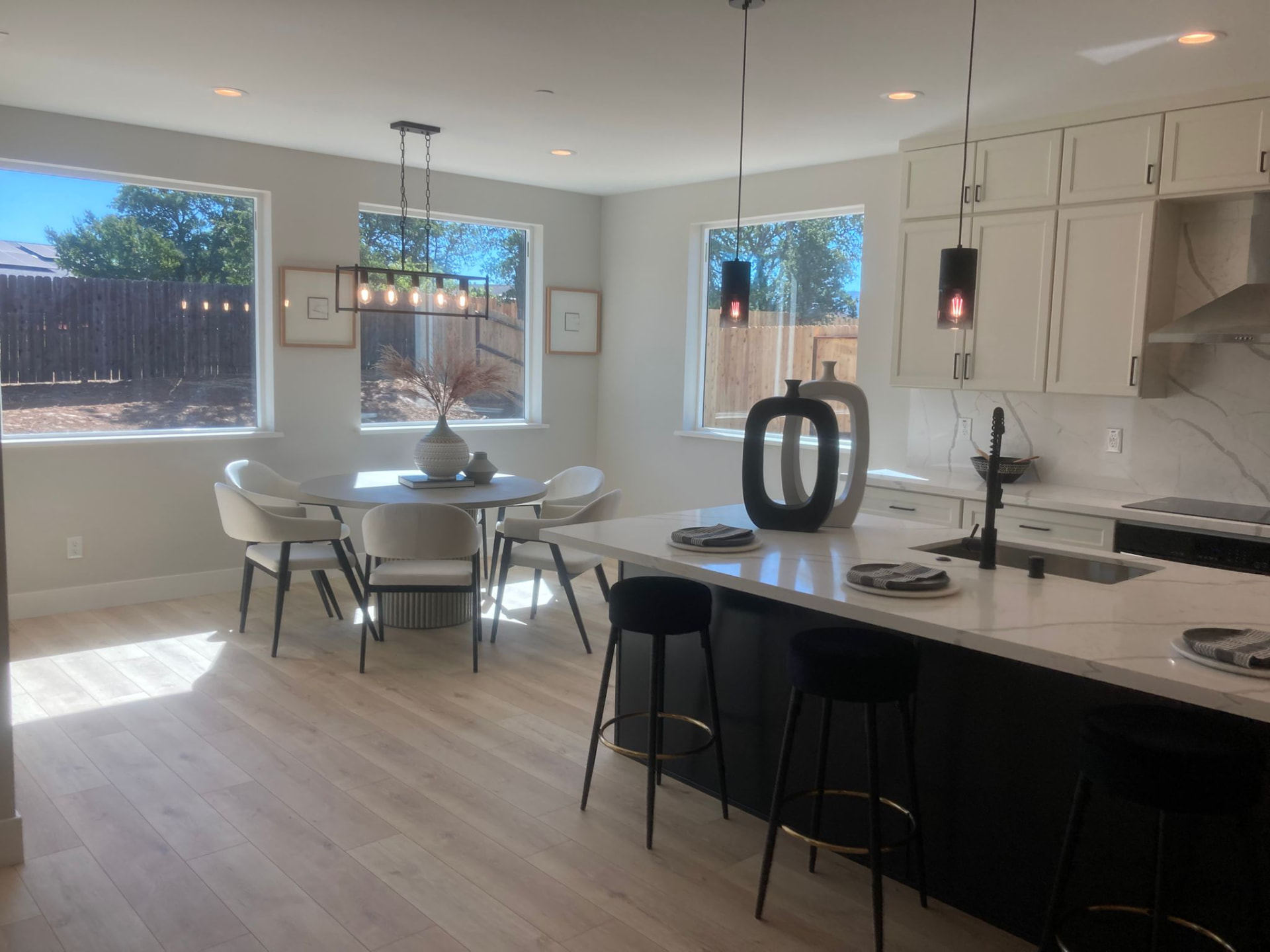
Broad guidance we give in the showroom: warm whites with a hint of cream flatter wood floors and brass hardware; cooler bright whites pair with grey floors, black hardware, and marble-look quartz.
Hardware, crown, and the details in the photo
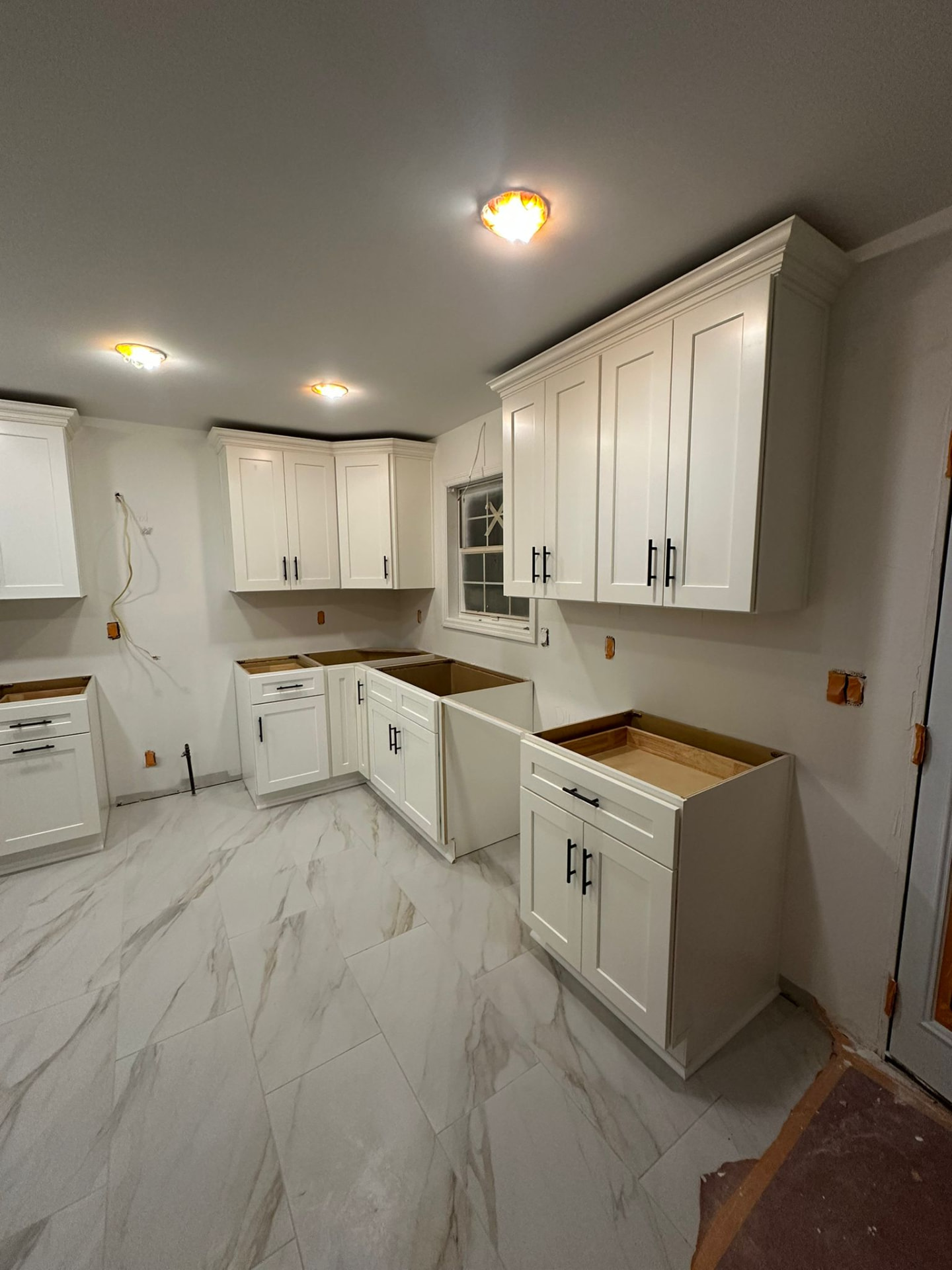
The kitchen above uses matte black bar pulls at 5 inches on doors and 6 to 8 inches on wide drawers. A useful convention: pull length should scale with drawer width, and a single pull centered on a 36-inch drawer looks undersized no matter how nice it is — use two, or use one long appliance-style pull.
The crown here is a stepped two-piece profile rather than a single large cove. Two-piece crown lets us take the cabinets to different heights and still land the molding on a consistent plane, which is essential when a run steps up over a hood or down beside a window.
Light rail along the bottom of the uppers is the other detail worth paying for. It hides the undercabinet fixtures so you see light on the counter rather than a row of glowing strips reflected in your backsplash.
Living with white cabinets
The honest downsides. White shows grease film around the range and the trash pull-out, and it needs wiping more often than a mid-tone stain. Toe kicks scuff. The area right beside the sink will eventually show water marks if it is not wiped.
None of it is difficult — warm water, a little dish soap, a microfiber cloth, no ammonia and no magic erasers, which abrade the finish. But if nobody in the house is going to do that, a light grey or a warm greige gives you 90 percent of the brightness with far more forgiveness.
Frequently asked questions
Are white shaker cabinets going out of style?
No. The shaker door is a plain frame-and-panel with no period-specific ornament, which is why it has stayed the most-requested door style for over a decade and works in both historic and new-build homes. What dates a kitchen is usually the hardware, the countertop, and the backsplash, all of which are easier to change than cabinetry.
What is the best material for painted shaker doors?
A solid maple frame with an MDF center panel. Maple takes paint cleanly, and the MDF panel does not expand and contract seasonally, so you avoid the hairline crack that appears where a solid panel shrinks out of the frame groove.
What paint sheen should kitchen cabinets be?
Satin, in a factory-sprayed catalyzed conversion varnish. Matte hides imperfections but is harder to clean, and semi-gloss is durable but highlights every surface wave. Satin is cleanable, low glare, and forgiving.
How do I keep white cabinets clean?
Warm water, a drop of dish soap, and a microfiber cloth, focusing on the areas around the range and the trash pull-out where grease film builds. Avoid ammonia-based cleaners and abrasive melamine sponges, both of which dull a catalyzed finish over time.
Ready to plan your project?
Home Design Cabinetry designs, builds, and installs custom cabinetry and countertops from our Lawrenceville, GA shop, serving Suwanee, Lawrenceville, Suwanee, Lawrenceville, Gwinnett County, and metro Atlanta. Every project starts with a free in-home consultation, a 3D design, and a fixed itemized quote — no pressure and no surprise change orders.
Book a free in-home estimate or browse our project gallery to see recent installs.